
Direct answer. Fashion teams need dedicated collaboration software because generic tools cannot manage the specific complexities of apparel product development, such as detailed BOMs, precise POMs, sequential sample review cycles, and intricate grading rules. Specialized platforms centralize communication, assets, and data, allowing designers, technical designers, product development managers, and merchandisers to work concurrently on tasks like spec creation, trim approvals, and factory communication. This dedicated approach reduces errors, accelerates decision-making across global supply chains, and ensures design intent translates accurately into factory-ready tech packs, ultimately speeding time to market.
Fashion product development involves a highly iterative and detailed process, distinct from many other industries. A single garment can require input from numerous stakeholders: designers visualize the concept, technical designers translate it into measurable specifications, product development managers source materials, and merchandisers ensure market viability. Each step generates critical data, from fabric compositions and colorways to sizing charts and regulatory compliance documents.
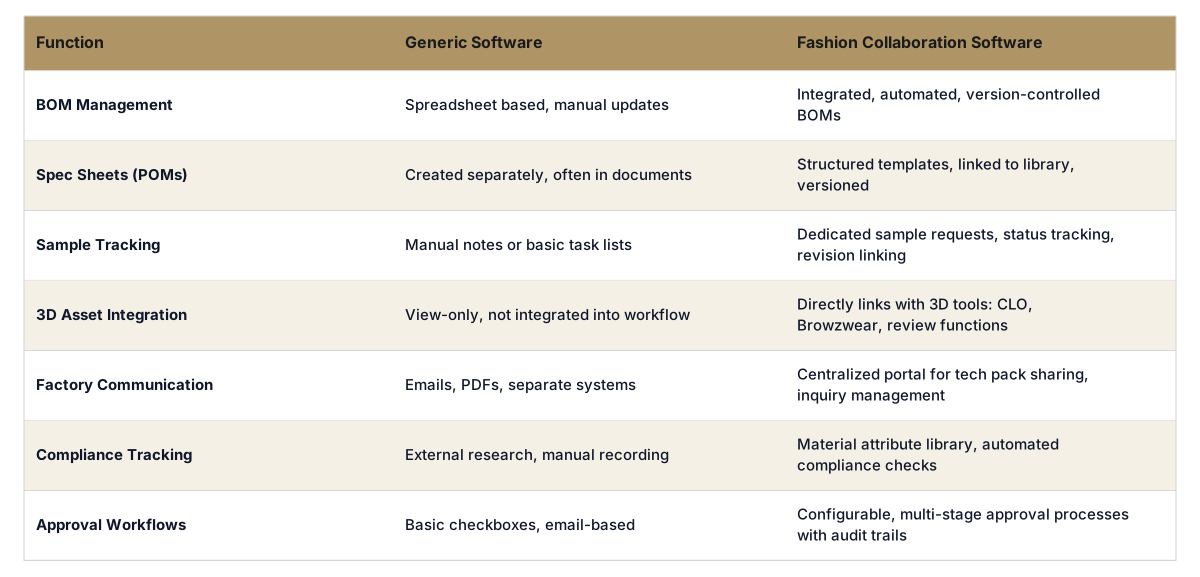
Unlike generic project management tools, fashion-specific collaboration software is built to handle this inherent complexity. It provides structured environments for managing revisions to patterns, approving textile prints, or tracking the progress of multiple sample rounds. This specialization ensures that all team members are working from the most current information, minimizing discrepancies that can arise from scattered files and email chains.
While tools like Trello or Asana can track tasks, they lack the intrinsic structure needed for fashion. A task to "approve fabric" does not capture the nuances of shade variations, minimum order quantities, or lead times. Fashion collaboration software embeds these details directly into the workflow.
For example, a dedicated platform can link a specific fabric choice to its corresponding pantone reference, supplier, and cost within the BOM. It can then alert the sourcing lead if a selected fabric is out of stock or does not meet compliance standards. This integrated data management prevents costly errors and delays that commonly occur when information exists in silos across different departments and systems.
Fashion design relies heavily on visual and technical assets: sketches, 3D renders, fabric swatches, and precise measurement charts (POMs). Collaboration software centralizes these assets, making them accessible to all authorized team members regardless of location. Version control is automatically managed, preventing confusion over which design iteration is the most current.
This centralization also supports efficient feedback cycles. Designers can upload new sketches, and technical designers can immediately link them to spec sheets, requesting specific details or clarifying construction methods. Any annotations or approvals are recorded directly within the system, creating a transparent audit trail for every design decision, from concept to production.
Technical designers are the bridge between creative vision and manufacturable product. They develop detailed tech packs, including construction notes, BOMs, and POMs, which are essential for factory communication. Dedicated collaboration software provides templates and tools specifically designed for creating and managing these documents.
The platform ensures that all components of a tech pack are complete and accurate before hand-off. For instance, it can flag missing trim details or inconsistent grading rules across sizes. This proactive validation significantly reduces the back-and-forth between brands and manufacturers, accelerating the production process and ensuring the final product meets the intended quality and fit standards.
Fashion product development is inherently global, involving design teams in one country, sourcing teams in another, and factories spread across continents. Effective collaboration software acts as a single source of truth, transcending geographical and time zone barriers.
All stakeholders, from initial design to final production, can access relevant project information in real time. This capability is critical for managing critical path deadlines, responding to factory inquiries, and coordinating sample approvals without the delays associated with traditional communication methods like email or phone calls. It allows every team member, from the merchandiser needing costing updates to the sourcing lead tracking material deliveries, to stay aligned.
The rise of 3D design tools has transformed fashion. Collaboration software integrates with these tools, bringing 3D assets into the broader product lifecycle. A 3D render created in CLO or Browzwear can be uploaded, reviewed, and approved directly within the collaboration platform, then linked to the corresponding 2D tech pack components.
This integration helps validate design concepts early, reducing the number of physical samples required. Comments on fit, drape, or construction made on a 3D avatar can be directly translated into amendments for the pattern maker or factory, creating a more efficient and accurate transition from digital prototype to physical garment. The workflow becomes a continuous loop, reducing sample rounds and accelerating time to market.
The F* Word is an autonomous fashion workflow layer that generates full tech packs in 8-10 minutes from a garment design and builds AI moodboards from a single prompt. It sits on top of your existing tools (Illustrator, PLM, factory portals) as the validation and orchestration layer, not a replacement for 3D sim or PLM. Teams use it to compress the brief-to-production loop from weeks to a single afternoon.
The primary goal is to centralize and streamline the entire product development process for apparel, from initial design concepts through to production hand-off. It enables effective communication and data sharing among designers, technical designers, merchandisers, and sourcing teams, reducing errors and accelerating time to market. This dedicated approach addresses the specific complexities of fashion.
Dedicated collaboration software provides a single source of truth for all project data and communications. Instead of relying on disparate email threads or scattered documents, all feedback, approvals, and revisions are logged directly within the system. This ensures every team member accesses current information, building transparency and reducing misunderstandings across departments and global locations.
Yes, many fashion collaboration platforms are designed to integrate with other critical industry tools. This often includes product lifecycle management (PLM) systems like Centric PLM or FlexPLM, 3D design software like CLO or Browzwear, and sometimes even enterprise resource planning (ERP) systems. These integrations create a continuous, comprehensive data flow across the entire business.
All roles involved in product development benefit significantly. Designers can manage creative assets, technical designers can build detailed tech packs, product development managers can oversee the entire lifecycle, and sourcing leads can track materials and suppliers. Merchandisers gain real-time visibility into product status, aiding in market planning and costing decisions. The overall team efficiency increases.
Fashion collaboration software helps reduce the number of physical sample rounds needed. By enabling detailed digital reviews and integrating with 3D design tools, teams can identify and resolve fit or design issues virtually. This reduces material waste, shipping costs, and production time associated with multiple physical samples, leading to a more sustainable and efficient development process.
Not necessarily. While large brands certainly benefit from the scalability and complex workflow management, many platforms offer solutions for small to medium-sized businesses as well. The benefits of improved efficiency, reduced errors, and faster time to market are valuable for companies of any size looking to optimize their product development operations and compete effectively.
Ready to orchestrate your fashion product development from concept to factory-ready tech pack with precision and clarity? See the workflow.
Get The F* Word workflow insights in your inbox.