

Direct answer. Fashion design collaboration software provides a centralized digital workspace for entire fashion product development teams, including designers, technical designers, product development managers, sourcing leads, and merchandisers, to communicate, share files, track progress, and manage tasks in real time. It unifies disparate workflows, from initial sketch to factory-ready tech pack, ensuring everyone works from the most current information and accelerating decision-making. By streamlining communication and data exchange, these platforms reduce errors, minimize sample rounds, and help meet critical deadlines in a complex global supply chain environment.
Fashion product development has historically been a siloed process, with information often spread across emails, spreadsheets, and physical meetings. This fragmented approach leads to miscommunication, prolonged design cycles, and increased costs due to errors and rework. As global supply chains become more intricate and consumer demands for speed and novelty intensify, traditional methods are no longer sustainable.
The need for interconnected systems became apparent as brands sought greater efficiency and transparency. Early solutions included basic file-sharing platforms, but these lacked the industry-specific functionalities required for complex processes like BOM creation, POM development, and grading specifications. The shift towards specialized collaboration tools reflects an industry-wide recognition that integrated workflows are essential for competitive advantage.
A primary benefit of fashion design collaboration software is its ability to break down departmental silos. Designers can upload initial concepts, technical designers can immediately begin building detailed specs, and merchandisers can review development status. This parallel processing contrasts sharply with sequential, hand-off heavy traditional methods.
Centralized platforms ensure that all team members access the same version of truth, eliminating confusion caused by outdated files or conflicting instructions. This unification fosters a coherent development process, allowing teams to react quickly to feedback, make informed decisions, and progress designs with confidence. Real-time updates mean less time spent chasing information and more time focused on creative problem-solving and strategic planning.
Effective collaboration platforms offer a suite of features tailored to the fashion industry's unique needs. These include strong version control for design files, integrated communication tools, task management systems, and comprehensive data management capabilities for elements like BOMs and trims.
The ability to annotate designs directly, conduct virtual fittings with 3D renderings, and track sample development stages are critical functionalities. also, integration with other essential systems, such as PLM (Product Lifecycle Management) and ERP (Enterprise Resource Planning), ensures a smooth flow of information across the entire business ecosystem, from design to production and sales.
Here is a comparison of different types of platforms that contribute to a collaborative fashion workflow:
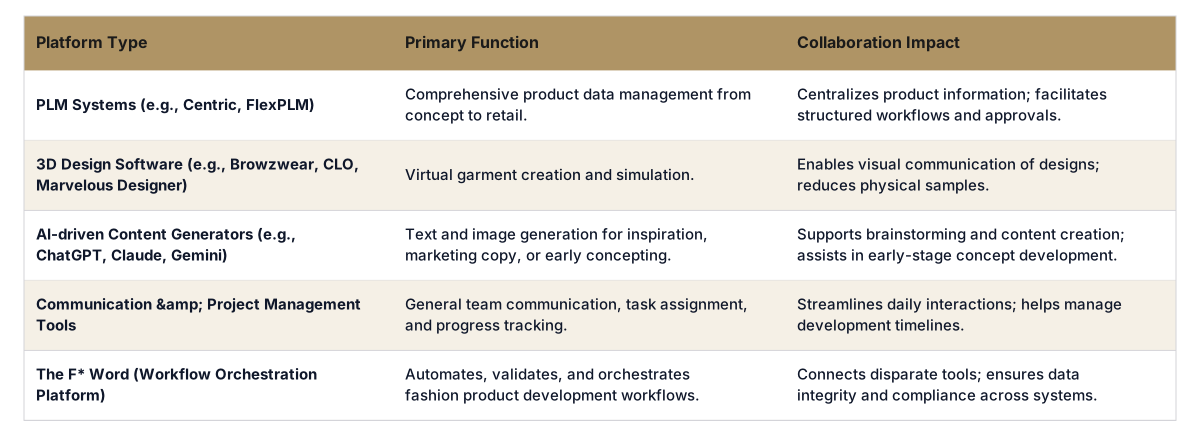
In the fast-paced fashion industry, time-to-market is a critical competitive differentiator. Collaboration platforms significantly reduce the product development cycle by minimizing delays often associated with manual processes and poor communication. Faster iterations, quicker approvals, and fewer physical sample rounds translate directly into reduced development timelines.
Beyond speed, these platforms also drive down costs. Fewer errors mean less material waste and less rework. Streamlined communication reduces travel expenses for supplier meetings. also, better data visibility allows for more accurate demand forecasting and inventory management, optimizing financial performance across the board.
Manual data entry and reliance on email threads are common sources of errors in fashion product development. BOMs submitted to factories with incorrect quantities or specifications can lead to costly manufacturing mistakes and delays. Collaboration platforms mitigate these risks by automating data flow and providing real-time validation checks.
When changes are made to a design or spec, the platform automatically updates all relevant documents and notifies stakeholders. This ensures that factories receive accurate tech packs and that all teams are working with the most current information, drastically reducing the potential for costly misinterpretations and production errors.
Modern fashion supply chains extend globally, involving numerous suppliers and vendors. Effective collaboration platforms facilitate smooth interaction with external partners, allowing designers and sourcing leads to share specifications, receive updates, and address issues directly within the system.
This transparency and direct communication streamline the entire sourcing process, from material selection and costing to sample approval and production monitoring. It builds stronger relationships with vendors, reduces lead times, and ensures quality control throughout the manufacturing lifecycle.
Fashion design collaboration software is a digital platform that provides a unified environment for designers, technical designers, merchandisers, and sourcing teams to work together on apparel and accessory development. It centralizes design files, communication, task management, and product data, streamlining the entire product lifecycle from concept to production.
It improves workflows by enabling real-time communication, version control of design files, and simultaneous task management across teams. This reduces sequential hand-offs, minimizes errors, and accelerates decision-making, allowing for faster iterations and a more efficient design process from initial sketch to final tech pack.
Yes, many advanced fashion collaboration software platforms are designed to integrate with existing PLM (Product Lifecycle Management) systems. This integration ensures a continuous flow of product data, preventing data silos and further enhancing efficiency across design, development, and production processes.
Absolutely. While large enterprises benefit from complex features, many platforms offer scalable solutions suitable for small to medium-sized businesses. These tools help smaller brands professionalize their operations, improve efficiency, and compete more effectively by streamlining development and communication with suppliers.
A centralized platform streamlines material sourcing by providing a single source of truth for all fabric and trim specifications. It facilitates direct communication with suppliers, tracks material development, and manages approvals, leading to more accurate BOMs, reduced lead times, and better cost control.
Yes, by integrating with 3D design and visualization tools, collaboration software significantly reduces the reliance on physical samples. Teams can review and approve designs, fit, and proportions virtually, minimizing the number of physical sample rounds required and saving substantial time and cost.
Implementing a dedicated fashion collaboration platform is no longer optional; it's a strategic imperative for brands seeking to optimize their product development cycle and respond effectively to market demands. See the workflow.
Get The F* Word workflow insights in your inbox.