English
AI tech pack generation turns a garment sketch into a structured production document with BOM, POM, grading, construction notes, and supplier handoff details. For technical designers and production managers, this matters because tech packs often take 4 to 8 hours per style when built manually.
The F* Word helps teams generate factory-ready tech pack drafts from a single sketch, then review and refine the details before sampling. It solves a practical production problem: missing BOM details, unclear points of measure, inconsistent grading, weak construction callouts, and sampling errors caused by incomplete documentation.
AI tech pack generation helps fashion teams turn a sketch into a production-ready draft with bill of materials, points of measure, grading rules, construction callouts, and vendor handoff notes. The F* Word creates the structured first pass, then technical designers and production managers review measurements, materials, tolerances, fit intent, and factory instructions before sampling.

In 2025 and 2026, sampling costs are harder to absorb. Brands are testing more styles, producing smaller runs, and moving through faster drop calendars with limited technical headcount. A messy tech pack creates a chain reaction. The factory asks more questions. The first sample comes back with preventable issues. The technical designer spends time correcting details that should have been clear earlier. The production manager loses calendar days.
Speed alone is not enough. A fast tech pack that misses measurements, trims, tolerances, or construction detail creates more work later. A perfect manual tech pack that arrives late also hurts the business. Technical teams need a faster way to create the base file without weakening factory readiness.
AI tech pack generation is useful when it handles the structured first pass: style information, BOM sections, POM tables, grading logic, construction callouts, and supplier-ready formatting. The human review still matters. The real gain is that technical designers spend less time formatting and more time checking fit logic, risk points, production clarity, and vendor questions before the first proto sample is made.
Technical designers own the spec. BOMs, POMs, construction notes, grade rules, tolerances. That work used to take 3 to 8 hours per pack in Illustrator or Excel. The AI tech pack generator compresses the first 80% into 8 to 10 minutes so the TD finishes packs instead of starting them.
The agent extracts silhouette and construction from a sketch or flat. It populates the BOM from a brand measurement library. It places callouts. It validates tolerances before export. The TD reviews, adjusts, and signs off. PLM, factory, and sourcing pull a spec that was reviewed by a human, generated by an agent.
Fit judgment stays human. Tolerance sign-off stays human. Brand-specific construction context stays human. The agent does the data work.
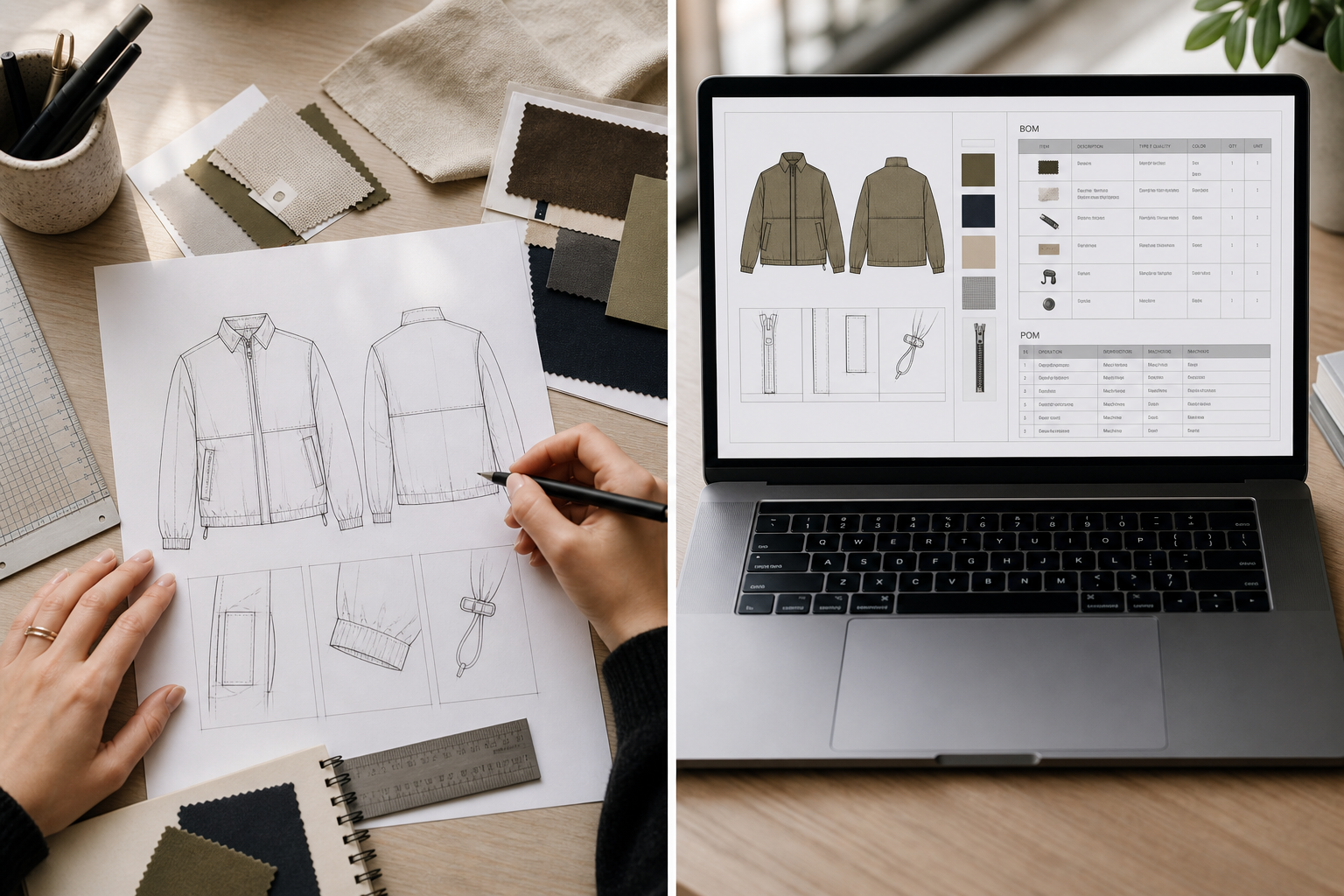
The workflow starts with a garment sketch. This can be a clean front and back drawing, an AI-generated product concept, or a designer’s sketch. The strongest inputs show seams, closures, pockets, trims, panels, hems, collars, cuffs, waistbands, and length. The team can add category, base size, target size range, fabric direction, fit intent, construction preferences, and vendor requirements.
The F* Word reads the garment direction and creates the first structured tech pack draft. This includes style information, visual references, construction callouts, BOM sections, POM fields, grading structure, and supplier handoff notes. The output should not be treated as final. It gives the technical team a serious first pass instead of a blank template.
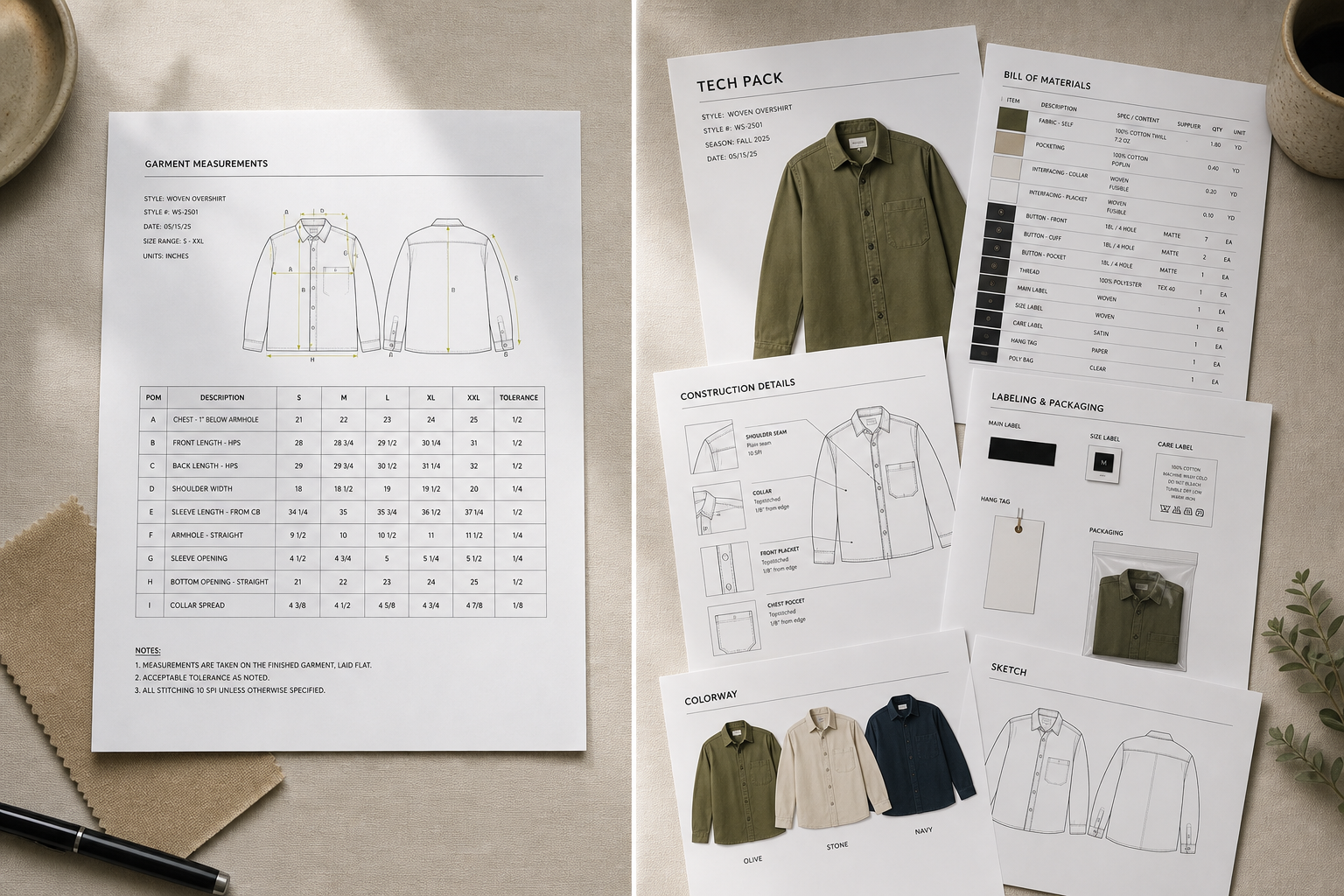
The BOM, or bill of materials, lists the components needed to produce the garment. This may include main fabric, lining, rib, thread, buttons, zippers, labels, elastics, interlining, care labels, packaging, and trims. The F* Word helps structure these components so the production manager can check BOM completeness before costing or sampling. Missing BOM details often lead to supplier substitutions, pricing delays, and avoidable questions.
POM means points of measure. These are the exact measurement points used to check the garment. For a shirt, this may include chest width, body length, shoulder width, sleeve length, neck opening, hem width, cuff width, and bicep. Grading explains how those measurements change across the size run. The F* Word helps generate the starting table, then the technical designer reviews it against fit intent, base size, size range, customer body data, and brand standards.
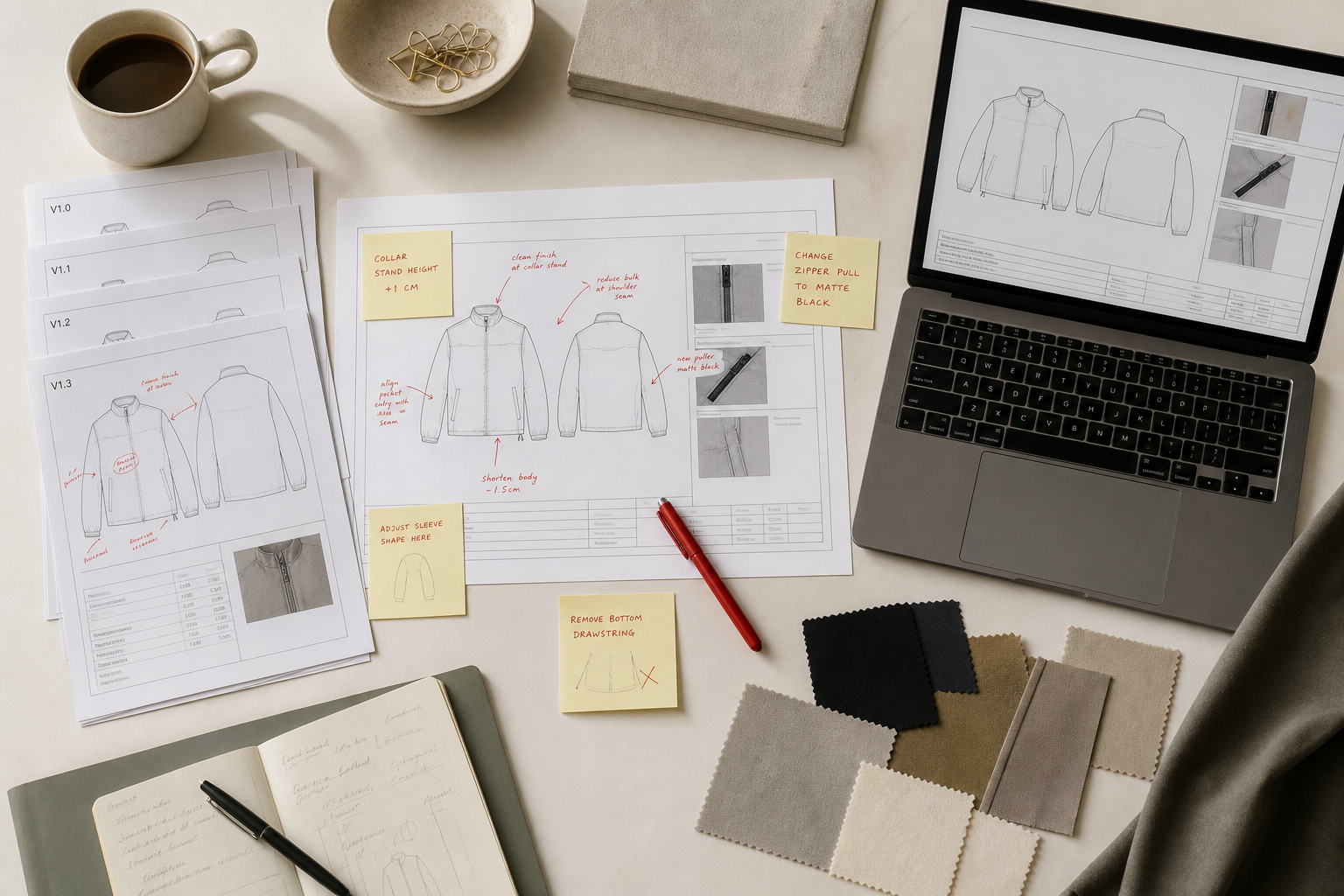
Before factory handoff, the team checks every field. Technical designers review fit logic, graded specs, tolerance ranges, and construction callouts. Production managers check materials, sourcing clarity, trim details, labels, packaging, and supplier questions. Design leads review whether the product still matches the original intent. The final file becomes cleaner, faster to send, and easier for the factory to interpret.
Traditional tech pack creation depends heavily on manual formatting and repeated data entry. A technical designer often starts from an old file, deletes irrelevant details, copies over a new sketch, rebuilds the BOM, edits POM rows, checks grading, adds callouts, and sends the file for review. That process works, but it is slow and easy to break.
The F* Word shifts the work from manual assembly to technical review. The system creates the draft structure. The human team checks the logic.
Speed
Technical designers rebuild tech packs manually from old files, often spending 4 to 8 hours per style.
A first draft is generated from a sketch, then reviewed for fit, BOM, POM, grading, and construction accuracy.
Cost
Sampling loops increase when measurements, trims, or construction notes are missing.
Cleaner first-pass documentation reduces preventable factory questions and sample corrections.
Output
BOM, POM, grading, and callouts vary by designer, category, and old template quality.
Tech packs follow a consistent structure across styles, vendors, and size ranges.
Team
Technical designers carry manual setup, formatting, and correction work.
Technical designers focus on review, risk checks, and factory readiness.
This does not remove technical skill. It makes technical skill more valuable. A poor grading rule can still cause fit issues. A vague construction note can still confuse a factory. A wrong fabric assumption can still affect cost, drape, and construction. The difference is that the team gets to spend more time catching those issues before sampling.
use The F* Word to speed up the first pass of a tech pack. They can generate BOM sections, POM tables, grading structures, and construction notes, then apply their fit and construction judgment. This is especially useful when working across similar styles, such as tops, pants, dresses, outerwear, or activewear in one drop.
use it to reduce factory back-and-forth. They need files that answer basic questions before the vendor has to ask. A clearer BOM helps with costing. Better POM tables help with sample review. Cleaner construction callouts reduce interpretation errors.
use it to protect design intent during handoff. A sketch alone does not give the factory enough information. Designers can add material direction, proportion notes, trim ideas, finish preferences, and fit intent before the technical designer reviews the file.
use it when the team is small and every sampling delay hurts cash flow. Early brands often rely on freelancers, external pattern makers, or overseas vendors. A clearer tech pack gives those partners better inputs and reduces preventable confusion.
use it to check whether product ideas are realistic before sampling. If a design requires too many unique trims, complex grading, expensive construction, or risky fabric choices, the team can catch that earlier and make a cleaner assortment decision.
The F* Word is best for technical designers, production managers, small apparel teams, founder-led brands, freelance design teams, and brands creating multiple tech packs across similar categories. It is especially useful when teams need faster BOM setup, clearer POM tables, starting-point grading, and stronger vendor handoff documents.
It is less useful as a replacement for fit expertise, patternmaking, lab testing, compliance review, or final production approval. AI can create a structured draft, but technical designers still need to check fit logic, fabric behavior, shrinkage risk, tolerances, construction feasibility, and factory capability.
More questions? See all FAQs
Looking at a credit-based AI studio? See the Genpire alternative for how connected workflows compare.
The F* Word helps technical teams turn sketches into tech pack drafts with BOM, POM, grading, construction callouts, and vendor handoff detail.